Modernization of Legacy ColdFusion Web App
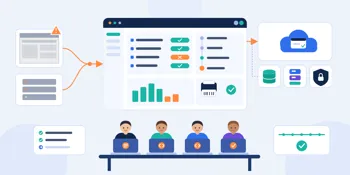
Facile Technolab modernized a legacy business critical web app to modern stack on cloud.
Read Full Case StudyFacile Technolab modernizes legacy .NET and enterprise systems to ASP.NET Core and Azure, preserving business logic through phased migration. Engagements run as staff augmentation/dedicated team ($15–$40/hr) or fixed-price, billed in 2-week sprints. 200+ projects delivered, 97% client retention. Facile Technolab modernizes legacy enterprise applications - Classic ASP, ASP.NET Web Forms, .NET Framework, WCF, ColdFusion, and PHP - to modern ASP.NET Core and Azure. We specialize in phased modernization that keeps production systems running throughout. 10+ years, 31 verified Clutch reviews, clients across the US, Australia, and Europe.


Most of our modernization engagements start with one of these technology situations:
VBScript, COM components, and IIS-native applications migrated to modern C# and ASP.NET Core. The most complex migration type - requires full rewrite with careful COM dependency assessment.
ASP.NET MVC, Web Forms, or WCF applications modernized to ASP.NET Core running on the current .NET 8 LTS release. Microsoft's .NET Upgrade Assistant supports much of this path.
Page lifecycle-based Web Forms converted to Razor Pages, MVC, or Blazor. Phased migration using the Strangler Fig pattern keeps production systems live during conversion.
Windows Communication Foundation services migrated to REST APIs, gRPC, or CoreWCF depending on client constraints. Includes authentication, contract, and binding migration.
CFML-based enterprise applications migrated to C# and ASP.NET Core. We have a delivered case study in this specific migration.
Enterprise PHP applications migrated to the Microsoft stack where the organization has standardized on .NET and Azure.
Legacy systems don't fail evenly across industries. In operations-heavy environments where software runs manufacturing lines, patient workflows, compliance reporting, or financial transactions, the cost of keeping an ageing system running grows faster than in lighter contexts, and the risk of cutover is higher. Here is how modernization typically presents in the industries we work with most.
Legacy patient management systems, HIPAA-era portals, and on-premise clinical tools built on Classic ASP, Web Forms, or older .NET Framework are increasingly difficult to maintain and extend. Compliance requirements (HIPAA, HL7, FHIR) have also evolved - applications built in 2005 were not designed for current standards. We modernize healthcare systems with a phased approach that keeps patient-facing and clinical operations running throughout.
Financial applications built on legacy .NET Framework or Classic ASP often carry undocumented business logic - interest calculation engines, compliance reporting rules, transaction validation - that is too risky to rewrite without careful mapping. Our FinTech modernization work includes a case study of a lending platform migrated from a decade-old stack to ASP.NET Core and Azure, preserving all business rules with zero downtime.
Manufacturing operations software - production scheduling, MES integrations, inventory management, quality reporting - is often the oldest software in a business because it works and nobody wants to touch it. WCF services, SOAP APIs, and VB6 COM components are common in this space. We specialize in modernizing manufacturing systems without disrupting production operations.
Engineering firms often run project management, document control, and tender management platforms built on older ASP.NET stacks. These systems are deeply embedded in daily operations but expensive to maintain as the underlying frameworks fall out of support. We have worked with engineering clients including Summers Engineering in Australia on exactly this kind of operational system modernization.
Construction companies running project management, job costing, and subcontractor management on legacy systems face growing pressure from cloud-first competitors. The challenge is that these systems often integrate with accounting platforms (MYOB, Xero) via legacy API patterns that need to be preserved during modernization. We assess these integration dependencies upfront before any migration begins.
Technology companies that have standardized on Microsoft stack sometimes inherit or acquire Classic ASP, Web Forms, or older SaaS products that don't fit their current architecture. Internal tooling built years ago by developers who have since left is a common scenario. We handle codebase takeover, assessment, and modernization for IT companies managing inherited .NET systems.
Student portals, LMS platforms, and administrative systems built on older .NET stacks are a common modernization request from education providers - particularly those that self-hosted systems that are now difficult to maintain and can't be moved to cloud without a modernization project. We assess and migrate these systems with an emphasis on data integrity and uptime during student-facing term periods.
Startups that acquired or inherited a legacy codebase - through acquisition, founder departure, or a v1 build that outgrew its stack - need modernization that preserves the product while enabling the team to move fast. We run discovery-first assessments that separate "must fix now" from "can improve incrementally" so startup budgets go where they have most impact.
Facile Technolab offers end-to-end software modernization services—from assessment and strategy to implementation, testing, and post-launch support. Engagements are tailored to your legacy stack, risk profile, and business timeline.
Our product development services help enterprises and startups design, build, and scale digital products that solve real business problems. From idea validation to full-scale software product development, we focus on creating secure, scalable, and market-ready solutions.
Our AI development services enable businesses to embed intelligence into their software products, workflows, and decision-making systems. We design and implement AI-driven solutions that improve automation, insights, and operational efficiency.
Our cloud development services help organizations build, migrate, and modernize applications for secure and scalable cloud environments. We support cloud-native development as well as modernization of legacy systems to cloud platforms.
Facile Technolab is trusted by product and IT teams that need modernization done carefully - without breaking critical workflows. Clients value our structured execution, clear communication, and Microsoft-first engineering approach for long-lived systems.
Software Modernization would bring huge benefits to your business, enabling it to be competitive and responsive to market demands. Among these are:
This agility, with modernized systems that enable rapid adaptation to changing business needs and support growing workloads, is designed to ensure future growth and keep businesses competitive and efficient.
Legacy system upgrade reduces risks on security and addresses vulnerabilities in ensuring your systems are secure against cyber threats. Modern systems will help to keep your business data safe and compliant.
It saves operational cost since it eliminates technical debt and minimizes the expensive maintenance of legacy systems hence resources are employed efficiently.
Modernized systems provide faster processing, enhanced reliability, and maximum usage of resources. It leads to better utilization by users and overall efficient systems.
Software modernization is easy to integrate with new tools and APIs that enhance functionality while ensuring proper interoperability for smooth communication between systems and data flow.
Modernizing the software will transform your legacy system into a solid base which will be used as support for long-term success within your business.

We follow a structured, low-risk delivery process built around one principle: your production system stays live throughout. Every modernization engagement starts with understanding what you have before touching a line of code — because the surprises in legacy systems always surface during discovery, not development, and it's better to find them early.
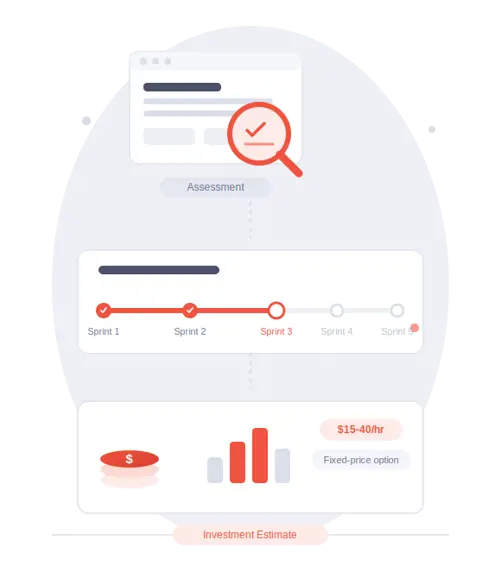
We review your existing codebase, map dependencies (COM objects, third-party integrations, database connections), identify undocumented business logic, and assess your infrastructure. You receive a detailed report covering migration complexity, risk areas, recommended approach, and a realistic timeline and cost estimate — before any development commitment is made.
Based on the assessment, we design the target architecture and choose the right migration pattern for your application - Strangler Fig for large systems that need to stay live, parallel rebuild for smaller well-scoped applications, or component-by-component for COM-heavy codebases. We define the phasing, agree on acceptance criteria for each module, and establish the integration and testing strategy before development begins.
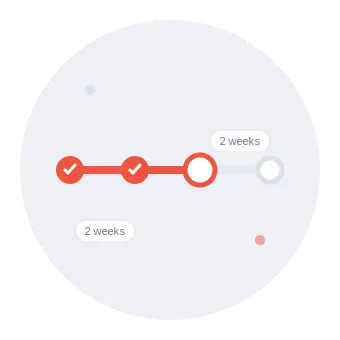
Development runs in two-week sprints with working, deployable output at the end of each sprint. Migrated modules go to production incrementally - you're not waiting months for a single cutover. Each phase is tested against the original system's behaviour before going live, and the legacy system remains available as a fallback throughout the migration period.
At completion you receive full code ownership, architecture documentation, deployment runbooks, and a knowledge transfer session with your internal team. We provide a post-launch support period as standard - typically 30–60 days - to stabilise the modernized system in production before transitioning to your ongoing maintenance arrangement.
.NET 8 vs .NET 6 compared. Support timelines, performance gains, and breaking changes. A practical guide to deciding when and how to upgrade.
A guide for CTOs, architects, and engineering leaders planning legacy modernization. Find out which NuGet packages can be upgraded, replaced, removed, or redesigned based on real-world migration experiences.
Discover how to modernize legacy .NET applications without operational disruption using zero-downtime strategies, phased migration, and best practices from Facile Technolab.
Read how how IT leaders transform operations with legacy modernization. Real case studies & strategies prove its impact on growth, automation & scalability.
A step-by-step guide for CTOs to modernize legacy systems using .NET 8 and Microsoft Azure. Learn strategy, tools, timelines, and expected ROI.
Many enterprises still rely on aging Windows applications that no longer scale. This guide walks IT leaders through a proven roadmap to migrate legacy apps to modern, cloud-native SaaS platforms.
Proven 5-phase framework to modernize legacy ASP apps. Eliminate security risks, reduce costs, boost performance. Includes migration strategies for COM, VBScript & databases.
This article provides a step by step process of migrating your enterprise php web applications to ASP.NET Core.
End-of-support looming? Migrate Web Forms to ASP.NET Core securely.
This blog article explains the why, how, and what’s next for enterprises to migrate from WCF to ASP.NET Core, offering actionable choices to future-proof communication layers while preserving business logic.
This article explores the strategic migration of ColdFusion applications to ASP.NET Core, offering actionable insights for technical leaders and decision-makers.
Find out the strategic path to think about migrating your legacy enterprise web applications to asp.net core.
See how teams modernized legacy systems with Facile Technolab—improving performance, security, maintainability, and cloud readiness. Our case studies highlight phased modernization approaches, integration considerations, and measurable operational impact across operations-heavy industries.
Facile Technolab modernized a legacy business critical web app to modern stack on cloud.
Read Full Case Study
Provided dedicated team for legacy modernization of payroll and attendance software.
Read Full Case Study
Legacy application modernization of various web apps used for handling college planning.
Read Full Case StudyAccelerate your business growth with our client-centric software development services.
We transform old systems into new, scalable solutions with improved performance and user-friendliness. Our approach will make sure your legacy systems are brought up to date with the standards of modern technology, so your business is going to remain competitive and responsive. Our modernization services help you cut operational costs and increase efficiency.
With expert capability in developing highly secured, scalable SaaS, we tailor our products and your business needs. We have flexible custom-built high availability for scalability and reliability products that support growth in business. Subscription-based software; for multi-tenant solutions-we build products that drive innovative customer satisfaction.
We bring in the best talent for your company to support project-specific demands and timelines. Our staff augmentation services guarantee you expert developers, engineers, or IT specialists for either short-term or long-term requirements. We ensure an easy integration into your team that accelerates the delivery of projects and realization of business objectives.
We build bespoke software solutions to match the specific needs of your business. From requirement analysis to design, development, and deployment, our bespoke solution will align with business objectives and improve business performance efficiency in operation. Our team brings scalable, secure, and future-ready solutions.
We help to build responsive websites that have friendly to user interaction, so they draw visitors in and support better conversion. We continue focusing on intuitive interfaces, optimised performance, and frictionless functionality on every device, for your website to enhance the retention of the users' base and generate business through newer technologies.
Manage the complete software development process, starting right from the planning phase through delivery with our outsourcing service. Using expert developers and our highly efficient project management process, we deliver on time with good quality. We leave the core activities to businesses but let us handle the more complex technical process of developing softwares.
Explore common questions about software modernization and learn more about how Facile Technolab can help you modernize your software infrastructure for enhanced business outcomes.
What is the difference between software modernization and a rewrite? Modernization preserves and transforms existing business logic - it's a phased process that keeps production systems running while gradually converting components. A rewrite discards the existing codebase and builds from scratch, which is faster to scope but carries more risk for complex enterprise systems with years of accumulated business rules. Most of our engagements use a phased modernization approach (Strangler Fig pattern) rather than a full rewrite, because it allows continuous validation and avoids a single high-risk cutover. A full rewrite is occasionally the right answer - typically when the legacy codebase is so poorly structured that incremental improvement is not viable.


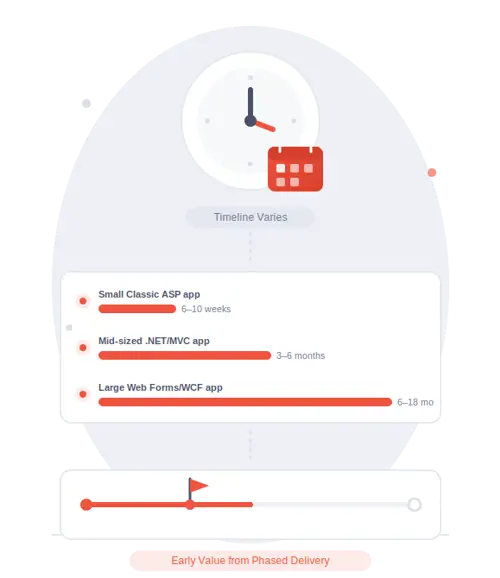
It depends entirely on the legacy platform, application size, and complexity. A small Classic ASP application (under 20 pages) might take 6–10 weeks. A mid-size .NET Framework MVC application typically takes 3–6 months. A large enterprise Web Forms or WCF system with complex integrations commonly takes 6–18 months. The most reliable way to scope a modernization project is a structured assessment phase - we review the codebase, identify dependencies, and provide a detailed timeline before any development begins.
In most cases yes. The Strangler Fig pattern allows phased migration where the legacy system and the modernized system run simultaneously, with a reverse proxy routing traffic to the appropriate application. New or migrated functionality goes to the modern system; unmigrated sections remain on the legacy system. This approach is standard for Classic ASP, Web Forms, and WCF migrations where operational continuity is the primary constraint.
Yes. Our core specialization is Microsoft-stack modernization - Classic ASP, ASP.NET Web Forms, ASP.NET MVC, .NET Framework, and WCF to ASP.NET Core, Blazor, and Azure. We also modernize ColdFusion and PHP applications to ASP.NET Core where the organization has chosen to standardize on the Microsoft stack. We don't modernize systems to non-Microsoft targets - if you're looking for PHP-to-Node.js or ColdFusion-to-Ruby migrations, we're not the right fit.
Legacy software modernization services improve outdated applications so they meet modern requirements for security, performance, maintainability, and scalability—often by modernizing architecture and moving to platforms like ASP.NET Core and Azure.
Our assessment covers: codebase inventory (technology versions, LOC, module structure), dependency mapping (third-party libraries, COM objects, external integrations), database analysis (platform, schema quality, data volume), risk identification (undocumented logic, security vulnerabilities, unsupported dependencies), and a recommended migration path with phased timeline and cost estimate. For Classic ASP and COM-heavy applications, the COM dependency assessment is the most critical component - it's what most determines migration complexity and timeline.
Software modernization helps businesses enhance system performance, improve security, enable scalability, leverage new features, and adapt to changing business requirements.
Software modernization offers benefits such as increased productivity, reduced maintenance costs, improved user experience, enhanced integration capabilities, and future-proofing your software.
Facile Technolab carefully assesses and plans for system integrations during the modernization process to ensure smooth transition and continuity of business operations.
Yes, AI enablement often becomes easier after modernization. Once the platform is cloud-ready and data flows are improved, AI features such as document extraction, anomaly detection, and intelligent search can be integrated safely.
Modernization engagements typically run as staff augmentation or dedicated team work at $15–$40 USD/hour depending on seniority and stack, or as a fixed-price phased engagement billed monthly in 2-week sprints, with payment tied to delivery. Most clients get a scoped proposal within 2–3 business days once we've completed the legacy system assessment.
For staff augmentation or dedicated team engagements, developers typically start within a week of signing. For fixed-price phased modernization, we deliver a proposal in 2–3 business days once your documentation and questions are complete.
Modernization engagements typically run as staff augmentation or dedicated team work at $15–$40 USD/hour depending on seniority and stack, or as a fixed-price phased engagement billed monthly in 2-week sprints, with payment tied to delivery. Most clients get a scoped proposal within 2–3 business days once we've completed the legacy system assessment.
For staff augmentation or dedicated team engagements, developers typically start within a week of signing. For fixed-price phased modernization, we deliver a proposal in 2–3 business days once your documentation and questions are complete.
Whether you're planning legacy system modernization, enterprise application modernization, or a complete software product modernization initiative, our experts can help you define the right modernization roadmap. Typically starting with a fixed-price assessment scoped in 2–3 business days.
Connect with us