Abp Framework Development Team for a medical technology company in Taiwan
How Facile Technolab helped Medical Device CTO Reduced Diagnostic Errors by 25% with Custom SaaS on Blazor & Azure.
Read Full Case Study
Build secure, scalable enterprise applications around the way your business actually operates. Facile Technolab designs and develops custom enterprise software for complex workflows, integrations, data-intensive operations, and business-critical processes. From discovery and architecture through development, integration, testing, deployment, and long-term support, we help organizations build enterprise applications that can evolve as their users, processes, and technology requirements change.



Off-the-shelf software can work well for standardized processes, but complex organizations often need applications that reflect their own workflows, data structures, integrations, and operational rules.
Our enterprise application development approach focuses on:
The goal is not simply to build more software. It is to create a system that makes critical business processes easier to operate, monitor, integrate, and improve.
Enterprise application development is the design and engineering ofsoftware systems that support complex organizational processes and largeor growing user environments.
Unlike a simple web application, an enterprise system often needs to coordinate multiple departments, databases, external services, user roles, integrations, security policies, reporting requirements, and business rules.
Enterprise applications may include:
A successful enterprise application should balance functionality with security, scalability, performance, integration, and maintainability.
Design and build business applications around your organization's workflows, users, data, integrations, and operational requirements.
We can develop:
Turn complex manual processes into structured digital workflows that improve operational efficiency and reduce repetitive work.
Solutions can include:
Build secure portals that connect employees, customers, suppliers, partners, and other stakeholders with the information and workflows they need.
Portal capabilities may include:
Connect enterprise applications with the systems your organization already relies on through secure APIs and integration workflows.
Typical integrations include:
We can also design and develop the API layer required for new enterprise applications.
Modernize legacy applications when outdated technology, technical debt, infrastructure limitations, or performance problems are slowing business growth.
Modernization may include:
For business-critical systems, we favor incremental modernization where it reduces migration risk.
Build and operate enterprise applications on cloud infrastructure with appropriate environments, deployment automation, monitoring, backups, and security controls.
Our Microsoft-focused engineering commonly uses:
Design and develop enterprise interfaces around real business workflows, user roles, operational efficiency, and adoption.
This can include:
Build enterprise applications that can support growing users, data volumes, integrations, and business-critical workloads.
Engineering considerations can include:
Continue improving and maintaining enterprise applications after launch as business requirements, technology, and customer expectations evolve.
Ongoing engineering can include:
We understand your business objectives, users, workflows, existing systems, technical constraints, integrations, and application requirements.
We define the application architecture, technology stack, data model, APIs, security model, integrations, cloud infrastructure, and scalability approach.
We translate business workflows and user requirements into intuitive interfaces, application flows, dashboards, forms, and role-specific experiences.
We develop the application in milestones and iterative releases, allowing stakeholders to review progress, validate workflows, and prioritize the next development cycle.
We integrate required business systems and validate functionality, security, data integrity, performance, permissions, and critical business workflows.
We establish production environments, CI/CD, monitoring, backups, and release processes, then continue improving the application as business and technology requirements evolve.
Build maintainable enterprise applications using Microsoft's modern application development ecosystem.
Our commonly used technologies include:
Develop responsive and business-focused interfaces that support complex enterprise workflows and different user roles.
Depending on the application requirements, the frontend stack may include:
Connect enterprise applications with business systems and manage application data through reliable APIs and database technologies.
Our technology stack can include:
Deploy, operate, monitor, and continuously improve enterprise applications using cloud infrastructure and automated delivery practices.
Our Microsoft-focused cloud stack commonly includes:
Not every enterprise application needs to be built from scratch.
If an organization already has a business-critical application, we assess whether modernization, incremental replacement, or new development provides the best outcome.
In many cases, the right answer is a combination of both: preserve valuable capabilities while progressively replacing outdated components.
Our solutions are tailored to meet your business needs, business processes, leveraging cutting-edge technologies, seamless integration, user-friendly interfaces, robust security, and ongoing support.
At Facile Technolab, we provide different services for making business applications. These services help companies work better, be more productive, and grow. Our solutions are made to fit the specific needs of big organizations, making sure they can grow, stay secure, and perform well. We aim to deliver creative and long-lasting applications that help businesses remain competitive in a changing digital world.
Our custom software development solutions provide solutions that are specifically designed for the needs of your organization. We work with you to understand what your goals and challenges are and create applications that make operations better, improve user experience, and support growth. It could be a custom CRM, ERP, or any business application; we will provide fast and scalable solutions that match the business strategy.
Facile Technolab offers expert software integration services to ensure your business applications integrate seamlessly with current systems. Our team ensures seamless data transfer and connectivity between disparate systems, whether external or internal. We help businesses streamline operations, reduce manual labor, and increase productivity to enhance decision-making and overall performance across the board.
We engage in modernizing legacy enterprise applications to make them better align with today's business requirements. Our enterprise application modernization service focuses more on optimizing older systems' functionality, security, and performance. We work to ensure seamless transition by modernizing to new technology by minimizing risks and enhancing end-user experience, all this while retaining precious data as well as functionality from an old system.
How Facile Technolab helped Medical Device CTO Reduced Diagnostic Errors by 25% with Custom SaaS on Blazor & Azure.
Read Full Case Study
How Facile Technolab built a digital legal search SaaS platform for an Australian startup - ASP.NET Core, Azure, and full-stack delivery from MVP to launch.
Read Full Case Study
How Facile Technolab built a cruise management SaaS for a Croatian travel client connecting ship owners, agents, and passengers on a single platform.
Read Full Case Study
Facile Technolab provided skilled ASP.NET developers Team to speed up release of a healthcare lab management system.
Read Full Case Study
Facile Technolab improved a fitness app with .NET backend fixes, TensorFlow AI integration, and admin panel enhancements for on-time release.
Read Full Case Study
Facile Technolab supported a healthcare software company in Netherlands modernize and integrate third-party services.
Read Full Case Study
Facile Technolab provided team of ASP.NET Zero developers to build a SaaS platform from scratch.
Read Full Case Study
Learn more about how we built a custom Invoicing Platform for client in Czech Republic.
Read Full Case Study
How Facile Technolab provided IT staff augmentation for an Australian financial services firm - scaling development capacity without full-time hiring overhead.
Read Full Case Study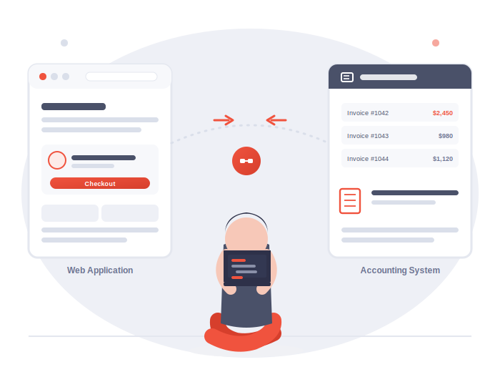
Enterprise applications rarely operate in isolation.
We can integrate applications with:
Where an existing system already contains valuable business logic or
data, integration can often be more practical than replacing it.
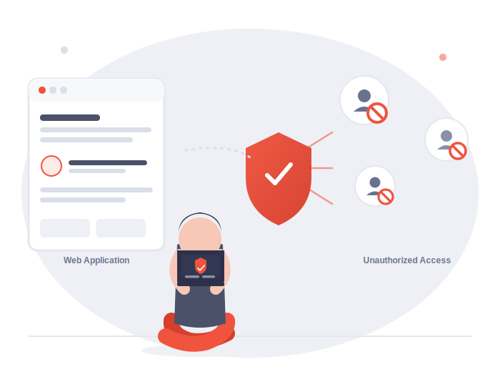
Security should be part of enterprise application architecture rather than added at the end of development.
Depending on the application, security considerations include:
Compliance requirements are assessed according to the application's
industry, geography, data types, and business requirements.
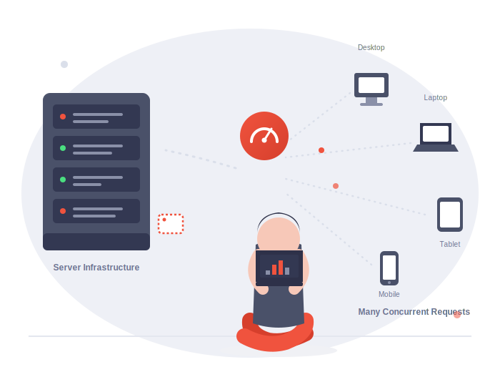
Enterprise applications need to remain responsive as users,
transactions, and data volumes increase.
Our architecture and engineering process can address:
Scalability should be designed around actual growth scenarios rather
than adding infrastructure complexity without a clear requirement.
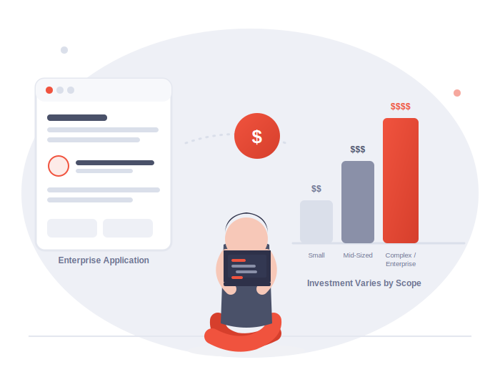
Enterprise application development costs vary significantly based on the
number and complexity of workflows, users, integrations, security
requirements, data architecture, and delivery milestones.
As a planning reference, Facile Technolab typically works at
approximately $15-$40 USD per hour, depending on the required
technology expertise and engagement model.
For larger enterprise applications, we recommend starting with discovery and architecture before committing to the full implementation budget.
Projects are generally divided into multiple milestones so scope,
priorities, delivery, and investment can be reviewed throughout the
engagement.
We begin with business workflows, users, constraints, and outcomes rather than treating enterprise development as a collection of technical features.
Our enterprise engineering capability includes modern .NET, ASP.NET Core, Azure, APIs, and related Microsoft technologies.
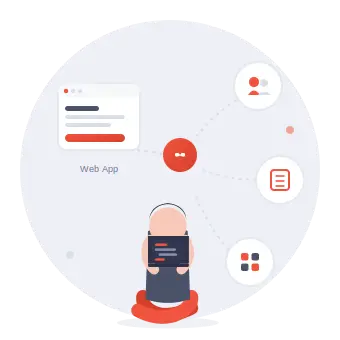
We can build new applications while also integrating with or modernizing existing enterprise systems.
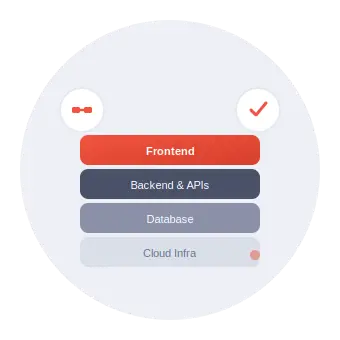
Enterprise applications often require frontend, backend, database, API, cloud, security, and integration expertise. We can address these layers as part of a coordinated engineering engagement.
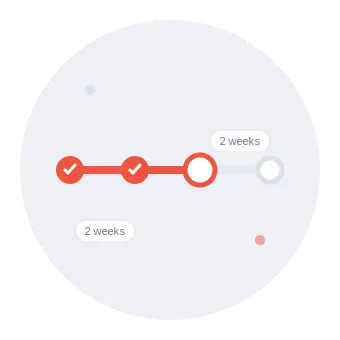
Projects are broken into milestones so scope, priorities, progress, and investment remain visible throughout development.
We can continue supporting the application after launch through enhancements, modernization, maintenance, and technical improvements.
If you have a complex application requirement but are not yet sure about the architecture, technology, or implementation approach, start with an assessment.
We can evaluate:
The outcome is a practical technical direction and delivery roadmap
rather than a generic development estimate.
How ASP.NET Core transforms enterprise web development with scalable architectures, microservices, and cloud-native solutions. Boost security, efficiency, and ROI for your business.
In this article, I will walk you through how to include Distributed caching in your enterprise web development for getting high-performance.
This article provides a brief overview of implementing real-time communication in enterprise web development using WebSocket and SignalR.
Learn how event-driven architecture can help your enterprise web development with asp.net core.
This article lists 7 best practices for implementing security in your enterprise web development with ASP.NET Core.
Find out the strategic path to think about migrating your legacy enterprise web applications to asp.net core.
Learn how asp.net core features helps with observability in your enterprise web applications.
Understand how domain-driven design when combined with modern web development framework asp.net core can help you build complex enterprise applications.
This article explains how Object-Relational Mappers (ORMs) can help in Enterprise Web Development when using ASP.NET Core
Many enterprises still rely on aging Windows applications that no longer scale. This guide walks IT leaders through a proven roadmap to migrate legacy apps to modern, cloud-native SaaS platforms.
Discover the 15 most powerful .NET Core + React component libraries for enterprise development in 2025. Streamline UI development, boost productivity, and build scalable applications with these battle-tested tools.
Discover ABP.io’s enterprise software benefits—scalability, security, real success, and Facile Technolab expertise with modern .NET solutions.
Find answers to commonly asked questions about custom enterprise software development services. Learn about our expertise, technologies, and processes to empower your business with efficient and scalable applications.
Enterprise application development is the design and engineering of software systems that support complex organizational workflows, users, integrations, data, and business operations.
The cost depends on application scope, workflows, integrations, users, security, data architecture, and delivery requirements. Facile Technolab typically works at approximately $15-$40 USD per hour depending on the required expertise and engagement model. Larger projects are generally divided into milestones.
A focused departmental application may take around 2-4 months, a mid-sized enterprise platform around 4-9 months, and complex multi-system applications can require 9 months or more. The actual timeline depends on scope, integrations, data, security, testing, and dependencies.
Yes. We can integrate enterprise applications with CRM, ERP, HR, accounting, payment, identity, legacy, SaaS, mobile, and partner systems through APIs and other appropriate integration approaches.
Yes. Modern .NET, ASP.NET Core, and Microsoft Azure are among the technologies we use for enterprise application development. The final architecture depends on the application's requirements and existing technology environment.
Yes. We assess whether the application should be modernized incrementally, selectively replaced, or rebuilt. For business-critical legacy applications, phased modernization can reduce migration risk while preserving valuable business logic and data.
Yes. Enterprise applications can support multiple departments, user roles, workflows, permissions, dashboards, and integrations. The architecture is designed around the organization's operating model and data flows.
The timeline depends on the project scope and complexity. We provide detailed project estimates during the initial consultation phase.
Tell us about the business process you need to improve, the systems you already have, and the outcome you want to achieve. We will help you determine the right architecture, technology approach, milestones, timeline, and investment.
Connect with us