No tech background? Learn how to create Enterprise SaaS Products using .NET Core . SaaS development lifecycle, assemble your dream team & launch profitably.
No tech background? Learn how to create Enterprise SaaS Products using .NET Core . SaaS development lifecycle, assemble your dream team & launch profitably.
The Exploding SaaS Landscape
The SaaS market will hit $883 billion by 2029 (Statista), growing at 18.7% CAGR. For non-technical founders, this represents unprecedented opportunity – but only 14% of SaaS startups survive beyond Year 3. The difference between success and failure? A disciplined development roadmap.
Why Non-Tech Founders Must Master Development Fundamentals
As a founder, you don't need to write code, but you must:
Your Proven 9-Stage Roadmap
Based on our software product development experience for 20 clients, in this article, we will present actionable steps, real-world examples, and founder-focused checklists.
Defining Modern SaaS
Software as a Service (SaaS) delivers applications via subscription cloud model with three core attributes:
The Unbeatable Business Advantages
| Benefit | Impact |
|---|---|
| Recurring Revenue | 92% higher valuation multiples vs. perpetual licenses |
| Lower Customer Acquisition Cost | 30-40% reduction through product-led growth |
| Continuous Innovation | Deploy features weekly vs. annual releases |
Market Validation Signals
The .NET Ecosystem Explained
Microsoft's framework offers:
Technical Advantages for SaaS
| Feature | Business Impact |
|---|---|
| Azure Integration | 1-click deployment, 99.95% uptime SLA |
| Multi-tenancy Support | Isolate customer data at code level |
| Performance | Handle 10x more users vs Node.js/Python |
Real-World .NET SaaS Successes
The 6 Non-Negotiable Stages
SaaS-Specific Lifecycle Strategies
Target Audience Definition Framework
Value Proposition Canvas
| Element | SaaS Example |
|---|---|
| Pain Reliever | "Eliminate manual data entry errors" |
| Gain Creator | "Predict cash flow 90 days ahead" |
| Differentiator | "Only solution with bank-level encryption" |
Goal-Setting for Non-Tech Founders
Core SaaS Team Structure
| Role | Responsibilities |
|---|---|
| Solution Architect | Azure infrastructure, security compliance |
| .NET Developers | Backend APIs, business logic |
| Frontend Specialists | Blazor UI implementation |
| DevOps Engineer | CI/CD pipelines, monitoring |
Hiring Model Cost-Benefit Analysis
| Model | Time-to-Hire | Annual Cost | Risk |
|---|---|---|---|
| In-House (US) | 6-9 months | $750K+ | High |
| Offshore (India) | 4-6 weeks | $220K | Medium |
| Hybrid (Facile) | 3 weeks | $350K | Low |
Collaboration Critical Success Factors
Service Tier Comparison
| Type | Best For | Warning Signs |
|---|---|---|
| Fixed-Price | Defined-scope MVPs | "No changes allowed" clauses |
| Time & Materials | Evolving products | Unmetered billing |
| Dedicated Team | Long-term scaling | Lack of senior architects |
Agile Methodology in Action
Sprint 0 (Foundation):
Sprint 1-4 (Core MVP):
MVP Definition Checklist
Must have:
Nice to have:
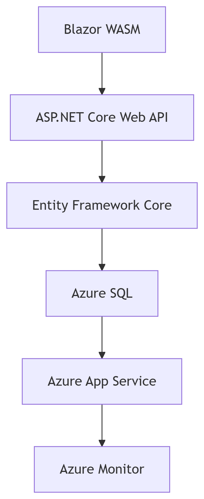
NET Tech Stack Blueprint
Testing Strategy
Pre-Launch Momentum Builders
Launch Day Checklist
Post-Launch Growth Engine
| Metric | Target | Action |
|---|---|---|
| Trial Conversion | >8% | Onboarding email sequence |
| Churn Rate | <3% | Cancellation intervention flow |
| Expansion Revenue | >20% | Usage-based upsell triggers |
Roadmap Recap
Founder Mindset Shift
"Technical debt isn't a developer problem—it's a business risk you manage like cash flow."
The Continuous Improvement Imperative